

You've Spent Your Life Serving Others
This May Be an Opportunity to Focus on Your Own Healing.
PTSD can affect every part of life — sleep, relationships, focus, mood, and the ability to feel like yourself again. Many veterans and first responders continue struggling even after trying medications or therapy.
Salience is currently conducting a PTSD-focused TMS Therapy initiative designed to help qualified individuals explore innovative treatment options through scholarship-supported care.
You've Spent Your Life Serving Others
This May Be an Opportunity to Focus on Your Own Healing.
PTSD can affect every part of life — sleep, relationships, focus, mood, and the ability to feel like yourself again. Many veterans and first responders continue struggling even after trying medications or therapy.
Salience is currently conducting a PTSD-focused TMS Therapy initiative designed to help qualified individuals explore innovative treatment options through scholarship-supported care.
Scholarship Criteria
You may qualify if you:
- Are between 18–70 years old
- Have a confirmed diagnosis of PTSD
- Are able to attend in-person visits at our Dallas location
- Are interested in scholarship-supported TMS care
Individuals will be required to:
- Reside or relocate to Texas for the eval & treatment
- Complete a minimum of three in-person visits
- Participate in a post-treatment follow-up approximately 4–6 months after treatment
- Consent to the OBSERVER registry
Individuals MAY NOT qualify if they:
- Have active psychosis
- Have had a substance use disorder within the last 30 days
- Currently use more than 2mg Lorazepam (equivalent of benzodiazepines) daily
Scholarship Criteria
You may qualify if you:
- Are between 18–70 years old
- Have a confirmed diagnosis of PTSD
- Are able to attend in-person visits at our Dallas location
- Are interested in scholarship-supported TMS care
Individuals MAY NOT qualify if they:
- Have active psychosis
- Have had a substance use disorder within the last 30 days
- Currently use more than 2mg Lorazepam (equivalent of benzodiazepines) daily
Individuals will be required to:
- Reside or relocate to Texas for the eval & treatment
- Complete a minimum of three in-person visits
- Participate in a post-treatment follow-up approximately 4–6 months after treatment
- Consent to the OBSERVER registry
What is TMS Therapy?
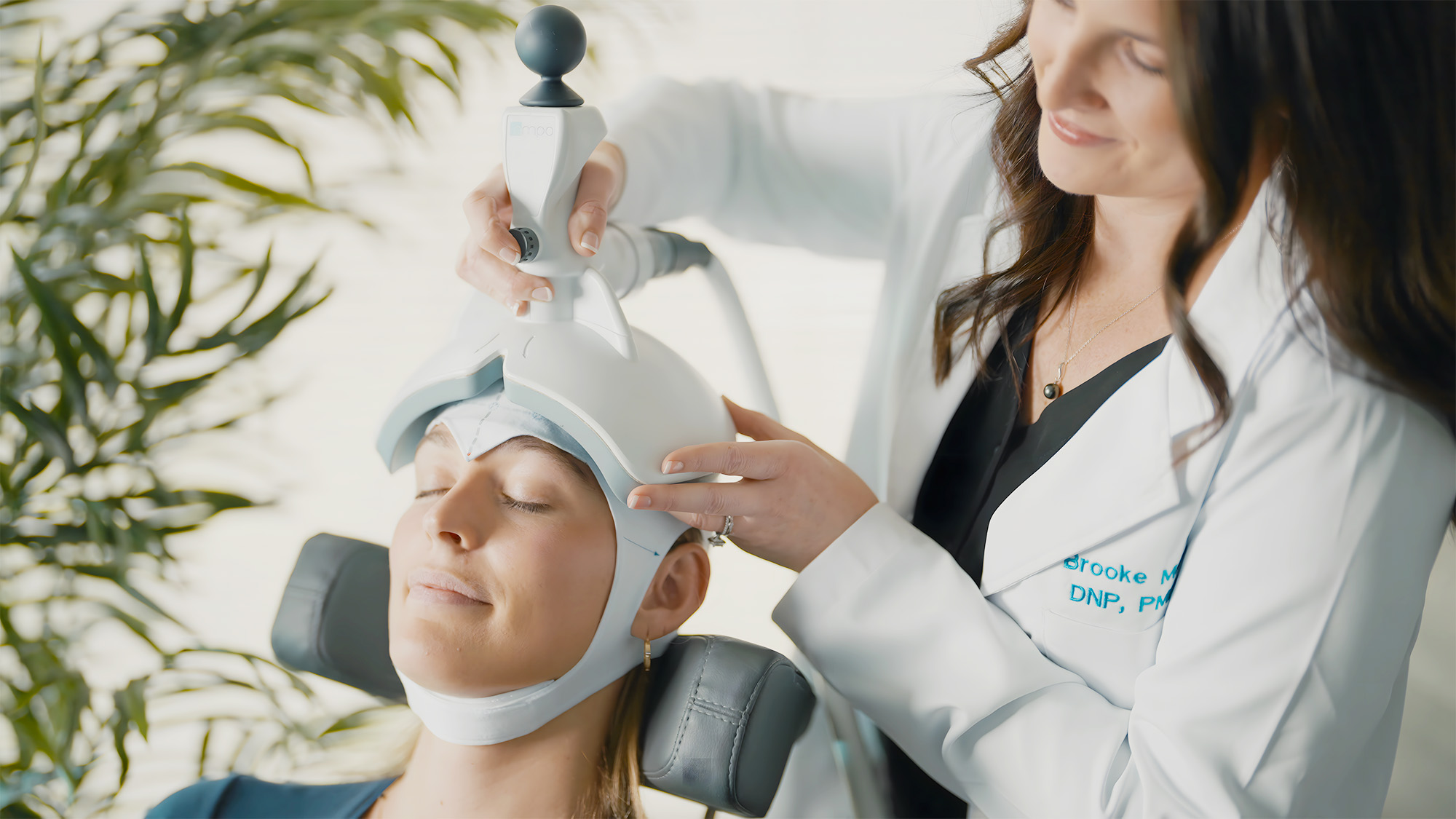
Transcranial Magnetic Stimulation (TMS) Therapy is a non-invasive treatment that uses gentle magnetic pulses to repetitively strengthen communication in brain networks that control our thoughts, emotions, and behaviors.
TMS therapy is FDA-approved for treatment-resistant depression, obsessive-compulsive disorder (OCD), and anxious depression.
What is TMS Therapy?
Transcranial Magnetic Stimulation (TMS) Therapy is a non-invasive treatment that uses gentle magnetic pulses to repetitively strengthen communication in brain networks that control our thoughts, emotions, and behaviors.
TMS therapy is FDA-approved for treatment-resistant depression, obsessive-compulsive disorder (OCD), and anxious depression.
HOW DOES TMS WORK?
TMS works to strengthen the salience network, which regulates your thoughts, behaviors, and emotions. When these brain networks aren't synchronized, your brain may have difficulty relaying information that can help you to "snap out of" negative thoughts, feelings, and behaviors.
TMS is similar to physical therapy for physical rehabilitation. During your outpatient sessions, TMS therapy uses the concept of repetition to build strength and enhance communication to get your brain in the habit of sending signals on its own.
HOW DOES TMS WORK?
TMS works to strengthen the salience network, which regulates your thoughts, behaviors, and emotions. When these brain networks aren't synchronized, your brain may have difficulty relaying information that can help you to "snap out of" negative thoughts, feelings, and behaviors.
TMS is similar to physical therapy for physical rehabilitation. During your outpatient sessions, TMS therapy uses the concept of repetition to build strength and enhance communication to get your brain in the habit of sending signals on its own.

RECONNECT TO LIFE WITH SALIENCE TMS THERAPY
RECONNECT
TO LIFE
WITH
SALIENCE
TMS THERAPY