For someone living with depression, finding a treatment that works can take time.
There can be medications to try, appointments to attend, symptoms to track and, for some people, months or years spent searching for the right combination of care. Even when an effective treatment option exists, the time required to receive it can become another challenge.
What if Salience could change that? Our recently published research is exploring that question in a new way.
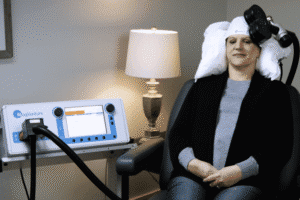
The case series, known as ONE-BD, examined an innovative approach to transcranial magnetic stimulation (TMS) for adults experiencing bipolar I depression. Instead of spreading TMS sessions across multiple weeks, all of the sessions are delivered at carefully spaced intervals in a single day.
The case was small and the findings are preliminary. More research is needed before researchers can determine how this approach compares with established treatments.
But the larger idea behind ONE-BD matters: Can we continue improving how advanced mental health treatments are delivered so that, in the future, effective care may be accessible to more people?
For Salience, helping answer questions like this is an important part of our commitment to advancing mental healthcare. Read the full study here.
Why Does This Research Matter?
TMS has changed the treatment landscape by providing a non-invasive option for people with certain mental health conditions, particularly depression.
But treatment isn’t only about whether something can work. Patients also have to be able to receive it.
A conventional course of TMS typically involves repeated 20 minute sessions over a period of about six weeks. For a patient, that can mean coordinating treatment around work, school, childcare, transportation and other responsibilities — all while managing a mental health condition.
Researchers around the world are therefore investigating whether TMS can be delivered differently while maintaining its therapeutic benefits.
ONE-BD takes that question to an ambitious endpoint: What happens when an entire course is condensed into one day?
30 adults with bipolar I disorder experiencing a current depressive episode participated in the case series. Each received 20 sessions of TBS during a single day, with approximately 20 minutes between sessions.
All 30 participants completed the treatment regimen. Researchers reported no serious adverse events and no switches to mania or hypomania.
Participants were then followed for 12 weeks.
Importantly, the researchers didn’t simply ask whether patients felt different at the end of treatment day. They tracked what happened in the weeks afterward.
Symptoms showed progressive improvement over the first six weeks following treatment. At week six, 73.3% of participants met criteria for response and 43.3% met criteria for remission (reduction of depressive symptoms) on the 17-item Hamilton Depression Rating Scale (HDRS-17). Other measures used in the study showed similar patterns of improvement.
These results are encouraging, but they are not the final answer.
ONE-BD was a case series involving 30 participants and researchers emphasize the need for controlled studies to further evaluate the approach.
Why Study TMS for Bipolar Depression?
Bipolar disorder includes periods of depression that can profoundly affect a person’s energy, motivation, concentration, relationships and ability to function in everyday life.
Finding effective treatments for bipolar depression can also be complex. That makes continued research into potential treatment approaches especially important.
ONE-BD does not establish TMS as a proven treatment for bipolar depression, nor does it mean that a single-day TMS course is now a standard treatment option.
Instead, the study gives researchers something valuable: real-world observations that can help determine whether this approach deserves larger, more rigorous investigation.
That’s how medical progress happens.
Early research raises a question. Preliminary findings help refine that question. Larger controlled studies test it more rigorously. Over time, that evidence can help determine whether a new approach should become part of clinical care.
ONE-BD represents one step in that process.
Could TMS Treatment Eventually Require Less Time?
This may be one of the most meaningful questions for patients.
Today’s TMS treatments can require multiple appointments over several weeks. That commitment may be manageable for some people and difficult for others.
Accelerated TMS research is examining whether multiple sessions can safely be delivered closer together, potentially changing how long a course of treatment takes.
ONE-BD pushes that concept further by studying a regimen in which 20 sessions were delivered in a single day.
That doesn’t mean patients should expect one-day TMS to replace conventional treatment. More research is necessary.
But if future controlled studies support accelerated approaches, reducing the time burden of treatment could have important implications for access.
It could mean fewer days away from home. Fewer trips to a clinic. Less disruption for families. And potentially fewer logistical barriers standing between a patient and advanced mental healthcare.
Those possibilities are part of what makes this research worth pursuing.
Research Today. Better Treatment Tomorrow.
At Salience TMS we believe providing excellent mental healthcare means more than using the treatments available today.
It also means helping advance the science behind what comes next.
Since 2011, Salience has delivered more than one million TMS treatments. Through that experience, we’ve seen what advanced treatment can mean for patients and families who have spent months or years searching for relief.
That experience also creates a responsibility to keep learning.
By participating in research like ONE-BD, Salience and its research partners can help ask new questions about how TMS works, how treatment can be optimized and how advanced therapies might eventually reach more people.
Where TMS Stands Today
TMS therapy is a non-invasive treatment that uses magnetic stimulation to target specific areas of the brain involved in mood and mental health.
TMS systems have received FDA clearance for the treatment of major depressive disorder, reducing anxiety symptoms associated with major depressive disorder, and obsessive-compulsive disorder (OCD).
For patients who have struggled to find relief from depression, TMS provides a treatment approach that works differently from medication. Treatment does not require surgery or anesthesia, and patients are awake throughout their sessions.
Research continues to explore how TMS may be optimized and how neuromodulation could potentially be applied to additional mental health conditions in the future.
TMS is not currently FDA-cleared for the treatment of bipolar depression, and ONE-BD should not be interpreted as establishing single-day TMS as a proven treatment for bipolar depression.
Instead, ONE-BD provides preliminary evidence that researchers can use to ask the next questions — and design the larger studies needed to answer them.
Why Salience Is Investing in TMS Research
Our mission is centered on helping patients pursue remission and recovery.
That means providing access to safe, evidence-based treatment today while continuing to support research that could improve treatment tomorrow.
Mental healthcare has evolved significantly, but there is still much more to learn about the brain, depression and the ways treatments such as TMS can influence the neural networks involved in how we think, act and feel.
Research gives us the opportunity to keep learning.
And ultimately, that research isn’t about a machine, a protocol or a scientific publication.
It’s about patients.
It’s about finding better ways to help people who haven’t found relief.
It’s about reducing barriers that can make treatment difficult to access.
And it’s about continuing to pursue new possibilities for people and families who are still waiting for an answer.
ONE-BD is an early step, but it is exactly the kind of question we believe is worth asking.
Read the Research
The ONE-BD study, “Real-world effectiveness of a single-day course of transcranial magnetic stimulation using an Optimized, Neuroplasticity-Enhanced regimen in Bipolar Depression (ONE-BD),” is published in Transcranial Magnetic Stimulation, the journal of the Clinical TMS Society.
The study is open access, allowing patients, families, clinicians, researchers and members of the public to read the complete research.
Read the full ONE-BD Case Study
Interested in Learning More About TMS?
The ONE-BD protocol described in this article is investigational and is not the same as the FDA-cleared TMS treatment currently provided for depression.
If you or someone you care about is struggling with depression and would like to understand whether currently available TMS therapy may be an option, Salience TMS Neuro Solutions offers free educational TMS consultations.